
A Look at Early Garage Doors and Their Evolution Over Time

Garage doors do more than open and close; they protect cars, seal the home from weather, and shape curb appeal. Over the past century, they have evolved from simple wooden gates to insulated, smart systems that affect energy use, safety, and daily convenience. Knowing that history helps homeowners understand why some doors need specific maintenance, which upgrades add the most value, and what to look for when replacing or repairing a unit. This article walks a clear timeline, from carriage-house doors to mid-century materials, the arrival of the overhead door and electric openers, and today’s connected, energy-efficient options. You will also find practical lists, easy comparison tables, and straightforward explanations of parts like panels, springs, tracks, and openers to guide buying or repair choices. We include short, direct answers to common questions and notes about local service for anyone who wants professional help with installation, inspection, or repair.
TL;DR
Garage doors have evolved from simple gates to smart, insulated systems.
Understanding their history helps with maintenance, upgrades, and replacement decisions.
This article covers the timeline from carriage-house doors to modern smart options.
It includes practical lists, comparison tables, and explanations of key components.
Find answers to common questions and information on professional local service.
What Were the Early Garage Door Designs and Their Origins?
Early garage doors grew out of carriage houses and gatehouses, large wooden openings built to store horse-drawn vehicles. As cars became common, builders reused those wide, swinging doors for early garages. These were usually heavy wood panels that swung out or slid and were operated by hand. They provided basic protection but took up driveway space and needed frequent upkeep. The materials and hardware reflected what local carpenters could build at the time: timber panels, iron straps, and simple hinges. Understanding those origins explains why later inventions focused on saving space, lowering maintenance, and making daily use easier for drivers.
How Did Carriage Houses Influence Early Garage Door Styles?
Carriage-house design shaped early garage doors in both form and detail. Builders copied the large double doors, decorative trim, and iron hardware found on stables and coach houses. Those early garages often matched the home’s facade and kept the same proportions needed for hitching and turning carriages. Because swing-out doors required lots of clearance, homeowners and architects eventually pushed for space-saving solutions, a practical pressure that led to overhead and sectional designs.
What Materials and Mechanisms Defined Manual Garage Doors?
Manual doors were almost always wood, built as one-piece swings or simple sliding panels. They were easy for local shops to build and repair but prone to warping, rot, and alignment problems. Weather sealing and insulation were minimal or missing. Mechanically, these doors relied on human strength or basic pulley assists, which limited garage placement and driveway layout. Those practical limits are why overhead and sectional doors caught on quickly; they reduced the footprint and lasted longer with less upkeep.
Who Invented the Overhead Garage Door and What Was Its Impact?
The overhead garage door arrived in the early 1900s and changed how people use garages. By lifting vertically and folding or stowing near the ceiling, these doors saved driveway space and made attached garages practical. Early solutions split the door into sections or used pivoting arms with counterbalancing springs and tracks to lift the weight. That innovation not only freed up yards and driveways but also opened the door (literally) to mass production, standardized parts, and the later development of electric openers.
What Innovations Did C.G. Johnson Introduce in 1921 and 1926?
C.G. Johnson is credited with two important steps forward: the sectional overhead door concept around 1921 and one of the first electric openers in 1926. Sectional doors use hinged panels that follow curved tracks, allowing the door to lift and rest overhead without swinging out. The electric opener automated that motion, adding convenience and consistent operation as household electricity became common. Those two ideas together reduced manual labor, made attached garages more practical, and helped create a market for standardized doors and replacement parts.
How Did the Overhead Door Corporation Shape Garage Door Evolution?
Companies like the Overhead Door Corporation drove change by manufacturing at scale, protecting key patents, and distributing products broadly. Standardized hardware and track dimensions lowered costs and made repairs easier because replacement parts fit across many installations. Widespread manufacturing also supported a network of installers and service contractors, which helped new housing developments adopt the overhead model quickly. Those early commercial practices set standards that still influence sectional overhead doors and accessory compatibility today.
How Did Garage Door Openers Advance Over Time?
Openers moved from simple motors to the connected systems we use today. The sequence of change (basic electric motors, radio remotes, safety rules, and now Wi-Fi and app integration) improved convenience, safety, and control. Different drive systems appeared to balance noise, cost, and reliability. The short timeline below highlights the big milestones so homeowners can see when safety rules and smart features became common and why drive type matters.
1926 – Early Electric Openers: Motors started doing the heavy lifting, cutting down on manual effort.
Late 1940s – Remote Controls Appear: Radio transmitters let drivers open doors without leaving the car.
1993 – Safety Mandates: Auto-reverse and photoelectric sensors became standard to reduce entrapment risks.
2000s–2020s – Smart and Wi-Fi-Enabled Openers: Networked openers added app control, alerts, and smart-home integration.
What Were the Key Developments in Electric and Remote-Controlled Openers?
Electric openers improved through better motors, gearing, and controls that increased lifting power and reliability. Different drive types (chain, belt, screw, and jackshaft) move the motor’s torque to the door in different ways, which affects noise, smoothness, and where the unit can be installed. Remote systems evolved from fixed-code radios to rolling codes for security and then to app-based access that ties openers into broader smart-home systems. Those advances let homeowners pick systems that match priorities like quiet operation, durability, or smart features.
How Have Safety Features Evolved in Garage Door Openers?
Safety moved from basic mechanical stops to active electronic systems that prevent entrapment. Photoelectric sensors near the floor stop or reverse a closing door if something crosses the path. Force-sensing systems adjust motor torque to avoid crushing injuries. Rolling-code remotes reduce the risk of code theft, and modern openers often include battery backup and diagnostic alerts. Regular maintenance and annual safety checks keep these systems working as intended, and professionals should inspect the door after impacts or part replacements to ensure compliance and safety.
Auto-reverse systems: Reverse the door if an obstacle is detected.
Photoelectric sensors: Create a fail-safe beam across the doorway.
Rolling-code remotes: Change access codes to reduce cloning risk.
After reviewing safety features, many homeowners choose professional inspection and service to verify opener performance and sensor alignment. Local technicians can test auto-reverse settings, check sensor aim, and recommend quieter or smarter drive upgrades when appropriate.
PJ's Doors, LLC handles opener repair, installation, and safety inspections focused on modern standards. We are a family-owned team in Richmond, Indiana, serving the surrounding region with trained technicians who assess drive types, replace worn parts, and confirm sensor and auto-reverse operation. If a noisy chain drive or a faulty limit switch is keeping you up or creating a safety risk, schedule an inspection, and we will recommend practical, cost-effective fixes. Understanding the history is useful, but real safety and reliability come from regular service.
What Mid-Century Innovations Transformed Garage Door Materials and Functionality?
Mid-century advances moved doors away from wood toward steel, aluminum, and later fiberglass, and brought insulation and mass production into play. Those changes made doors stronger, lowered maintenance needs, and introduced measurable R-values to reduce heat transfer for attached garages. New finishes resisted rust and weathering, and thinner, factory-finished panels became common. The result: more choices for homeowners and doors that contribute to energy efficiency and curb appeal, not just security.
How Did Steel, Aluminum, and Insulation Improve Garage Doors?
Steel and aluminum brought strength and lower maintenance compared with wood, and insulation began to control heat transfer for attached garages. Insulated sectional doors use foam or composite cores to increase R-value, which can reduce HVAC load for adjacent living spaces. Aluminum allowed sleeker, lighter profiles and room for more glass, while fiberglass works well in moist or coastal areas. These material and insulation improvements lengthened service life, expanded design choices, and made doors part of a home’s energy plan.
What Role Did Remote Controls Play in Garage Door Convenience?
Convenience: Remotes replaced hand operation and made daily life simpler.
Security: Rolling-code technology closed major security gaps from early fixed-code remotes.
Integration: Smartphone control added alerts and scheduling for modern homeowners.
Those conveniences also created new upkeep tasks: battery checks, reprogramming, and confirming compatibility, that homeowners should include in routine maintenance.
How Has Modern Technology Revolutionized Garage Doors?
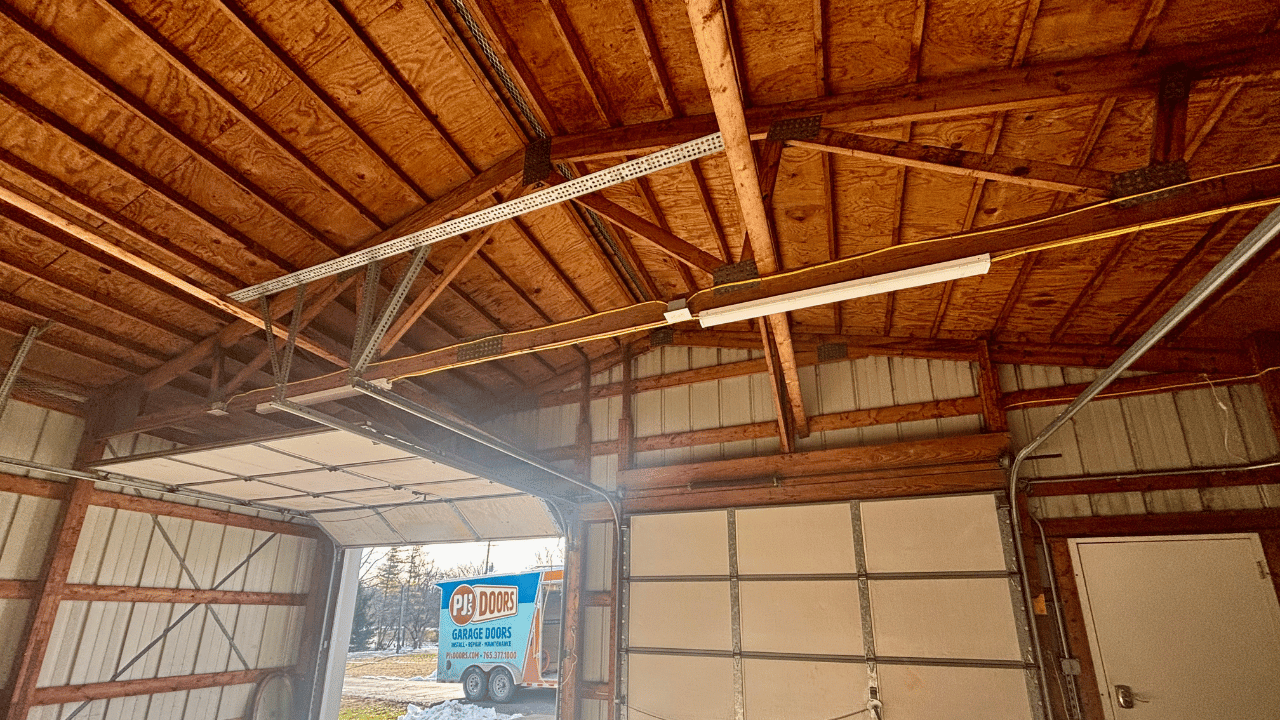
Today’s garage doors tie into the connected home: Wi-Fi openers, insulated panels, and refined finishes turn the door into an energy, security, and style asset. Smart features let you check door status, receive alerts, and integrate with automation platforms. Energy improvements (better seals, thermal breaks, and higher R-value panels) cut heat loss. Taken together, these changes affect installation choices, maintenance schedules, and lifecycle planning for homeowners who want both performance and curb appeal.
What Smart Features and Energy-Efficient Solutions Are Available Today?
Modern smart systems commonly include app control, scheduled rules, real-time alerts, camera integration, and voice assistant support. Energy improvements include insulated panels, better weather seals, and higher R-value cores. With app control, you can open or close remotely, review activity history, and create automations based on time or location. Cameras add visual verification and event recording, while advanced seals keep drafts and moisture out. These features improve convenience, lower energy loss, and make the garage part of an overall smart-home strategy.
App control and notifications: Remote operation and instant alerts.
Integrated cameras: Visual confirmation and deterrence.
Insulated panels and weather seals: Better thermal performance for attached homes.
If you are ready to add smart features or insulation, PJ's Doors, LLC installs Wi-Fi openers and energy-efficient doors that combine insulated panels with professional weather sealing. Serving Richmond and nearby communities, we emphasize clear pricing and fully stocked trucks so installations finish faster. Ask for a service assessment to confirm compatible opener models and the best weather-seal options for your garage.
How Do Modern Security Enhancements Protect Homes?
Today’s security improvements combine rolling-code access, cameras, encrypted communications, and tamper-resistant hardware to reduce unauthorized access and false openings. Rolling codes change transmitter codes each use, preventing replay attacks. Cameras paired with event logs give you context if something looks suspicious. Encrypted app connections and optional two-factor authentication secure remote access. Physical upgrades like reinforced locks and motion lights complement electronics. Regular inspections and firmware updates keep these systems working against new threats.
Rolling-code transmitters: Dynamic access codes reduce cloning risk.
Integrated cameras: Provide video for verification and incident review.
Encrypted app connections: Keep remote commands and status data private.
If you want a security-focused installation, PJ's Doors, LLC offers rolling-code openers and camera options and recommends a security assessment or estimate. Our technicians evaluate your existing hardware, propose upgrades that fit your budget, and handle installations to reduce entry risk. We will also flag needed firmware updates, sensor replacements, or stronger physical restraints to bring older systems up to current practice.
What Does the Future Hold for Garage Door Technology and Sustainability?
Looking ahead, expect more predictive maintenance, sustainable materials, and energy integration. Systems that monitor motor current, cycle counts, and vibration can warn of wear before a failure. Recycled or longer-life materials and low-VOC finishes will reduce environmental impact over a door’s life. Solar or battery backup for openers could keep access running during outages. Together, these trends make garage doors a longer-term, energy-aware part of the home.
How Might AI and Advanced Automation Shape Garage Doors?
AI and automation could analyze sensor data (motor current, vibrations, and cycle counts) to predict part wear and suggest service before breakdowns occur. Those diagnostics would spot weakening springs, bearing issues, or alignment drift early so repairs can be scheduled instead of reacted to. Automation could also fine-tune access rules using geofencing, usage patterns, and adaptive schedules that balance convenience with security. These features are emerging but build directly on today’s smart-opener telemetry and edge computing trends.
What Are Emerging Trends in Sustainable Materials and Eco-Friendly Designs?
Manufacturers are exploring recycled-content panels, composite cores, and low-VOC coatings to reduce the environmental footprint of doors. Designs that prioritize repairability and recyclability extend service life and lower disposal impact. Energy integration (solar-assisted openers or onboard battery reserves) can reduce grid dependence and improve resilience. Homeowners should weigh lifecycle benefits against upfront cost and consider local climate and maintenance when choosing sustainable options.
PJ's Doors, LLC can walk you through energy-efficient and sustainable door choices and help weigh repair versus replacement. Working with a local provider makes it easier to match materials to regional conditions and maintenance realities. If you live in Richmond or nearby, schedule an assessment to review expected energy savings and lifecycle tradeoffs for the models you are considering.
PJ's Doors, LLC is available to schedule service appointments or provide free estimates for installation, repair, or security assessments. As a local, family-owned business serving Richmond, Muncie, Connersville, New Castle, Knightstown, Greenfield, Anderson, Pendleton, Rushville, Hagerstown, Cambridge City, IN, and Oxford, OH, we focus on modern solutions like smart openers, insulated doors, and professional weather sealing to improve comfort and security. Our technicians perform safety inspections, opener installations, and energy-focused upgrades, and we offer transparent pricing and fully stocked trucks to minimize repeat visits. If you are considering upgrades or need a safety check, contact PJ's Doors, LLC to arrange a visit or estimate.
Frequently Asked Questions
What are the benefits of insulated garage doors?
Insulated garage doors reduce heat transfer, lower outside noise, and improve comfort in attached garages or rooms next to the garage. Better insulation can slightly reduce heating and cooling costs for adjacent living spaces and helps doors resist dents by adding structural support. Over time, insulated doors often pay back their cost in comfort and energy savings.
How can I maintain my garage door for longevity?
Simple, regular maintenance extends a garage door’s life. Inspect springs, cables, rollers, and tracks for wear or damage. Lubricate moving parts like hinges and rollers, and check weather seals for gaps. Test safety features, especially the auto-reverse, regularly. A professional inspection once a year catches problems early and keeps everything running safely.
What should I consider when choosing a garage door opener?
Pick an opener based on drive type, power, noise, and smart features. Make sure the opener has enough torque for your door’s weight and size. If your garage is under living space, choose a quieter belt drive. If you want app control or camera features, confirm the model supports those options. Also consider battery backup if power outages are a concern.
What are the signs that my garage door needs repair?
Watch for unusual sounds like grinding, slow or jerky movement, a door that gets stuck, or visible damage to panels and hardware. If the door will not respond to the opener or remote, that could be an electrical or control issue. Address problems quickly; a small issue can become a safety risk if ignored.
How do smart garage door systems enhance home security?
Smart systems add remote monitoring, alerts, and integration with home automation. You can check door status from anywhere, get notified if the door is left open, and grant temporary access for guests. Rolling-code remotes and encrypted app connections reduce unauthorized access risk, and integrated cameras provide visual verification for added peace of mind.
What are the environmental benefits of modern garage door materials?
Modern materials like recycled steel and low-VOC finishes reduce the demand for new resources and lower emissions during installation. Insulated designs reduce energy loss in attached garages, cutting overall home energy use. Choosing durable, repairable materials also reduces waste over a door’s lifetime.
Get Yours Now
The history of garage doors shows how a simple opening grew into a key part of home comfort, security, and efficiency. Knowing the timeline and technology helps you choose the right upgrades and maintenance plans for your home. When you are ready for an update or a safety check, local experts can recommend practical solutions that match your budget and needs. Contact PJ's Doors, LLC to learn how we can help you pick the right door or opener for your home.
