
Commercial Garage Door Types: Roll-Up vs Sectional vs High-Speed
The right commercial garage door is the one that matches your building, your traffic, and your climate. Pick wrong and you get a door that is too slow for your dock, too flimsy for your security needs, or too expensive for what the opening actually does. The three types most businesses choose between are roll-up (coiling) doors, sectional overhead doors, and high-speed doors, and each one is built for a different job. Here is how they compare, so you can walk into a conversation about commercial door solutions already knowing what fits.
Before the types, one rule that saves money: match the door to how the opening is used, not to what looks toughest. A rarely used storage bay and a busy loading dock have very different needs, and paying for a high-speed door on a low-traffic opening is as wasteful as putting a light-duty door on a dock that cycles all day.
Roll-up (coiling) doors
A roll-up door is made of interlocking steel slats that coil into a barrel above the opening. There are no overhead tracks running back into the building, which is why roll-ups are the go-to for tight spaces, security, and heavy-duty use.
Best for: warehouses, self-storage, loading docks, fire stations, and any opening where security and durability matter more than looks.
Strengths: very durable, hard to force open, space-saving since nothing extends into the ceiling, and available in insulated versions.
Trade-offs: utilitarian appearance, and heavier slat doors move slower than a high-speed door.
We install and service coiling doors constantly, and our post on commercial roll-up door installation goes deeper on the setup, while our roll-up door guide for Indiana businesses covers why so many owners choose them.
Sectional overhead doors
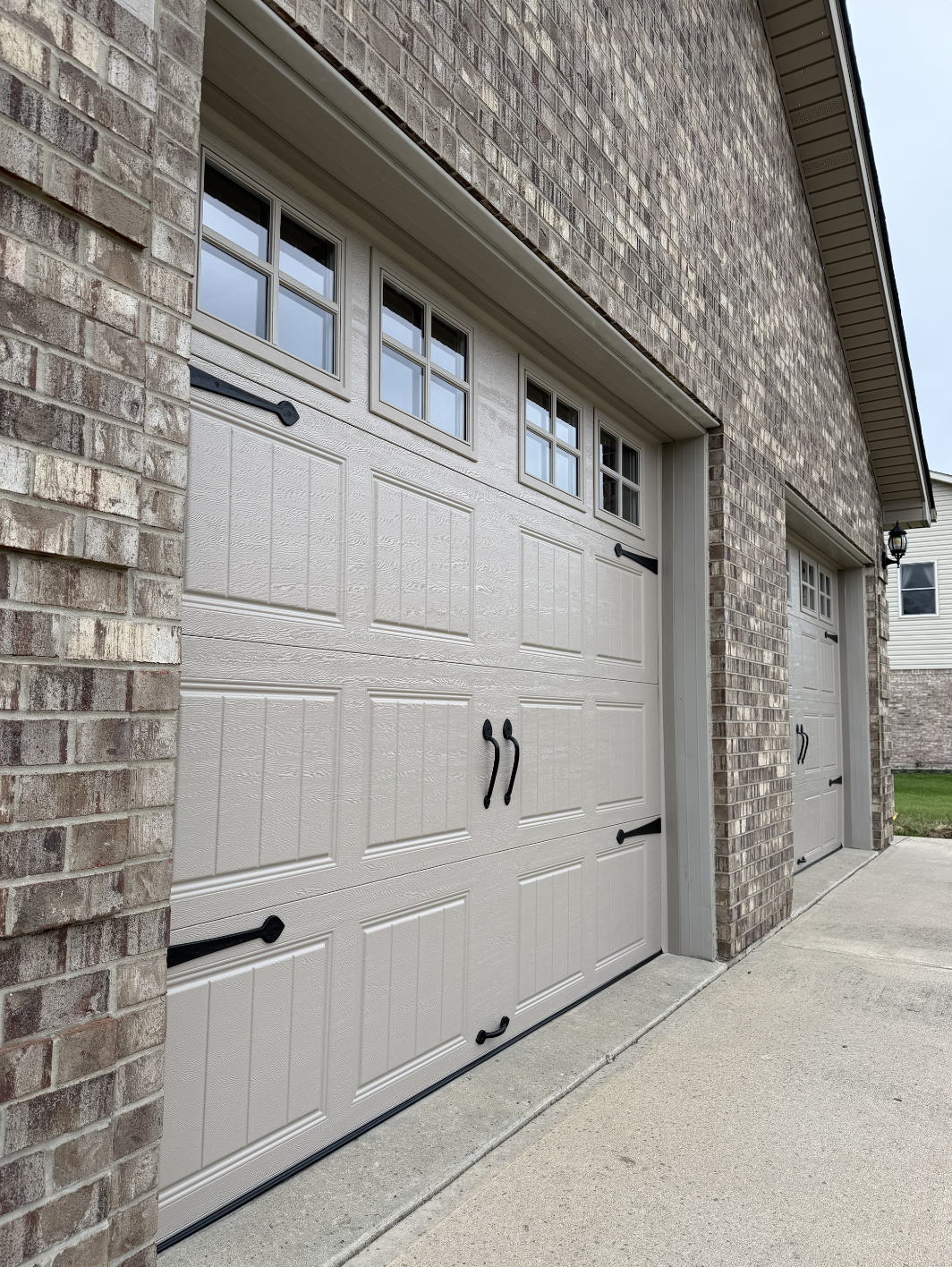
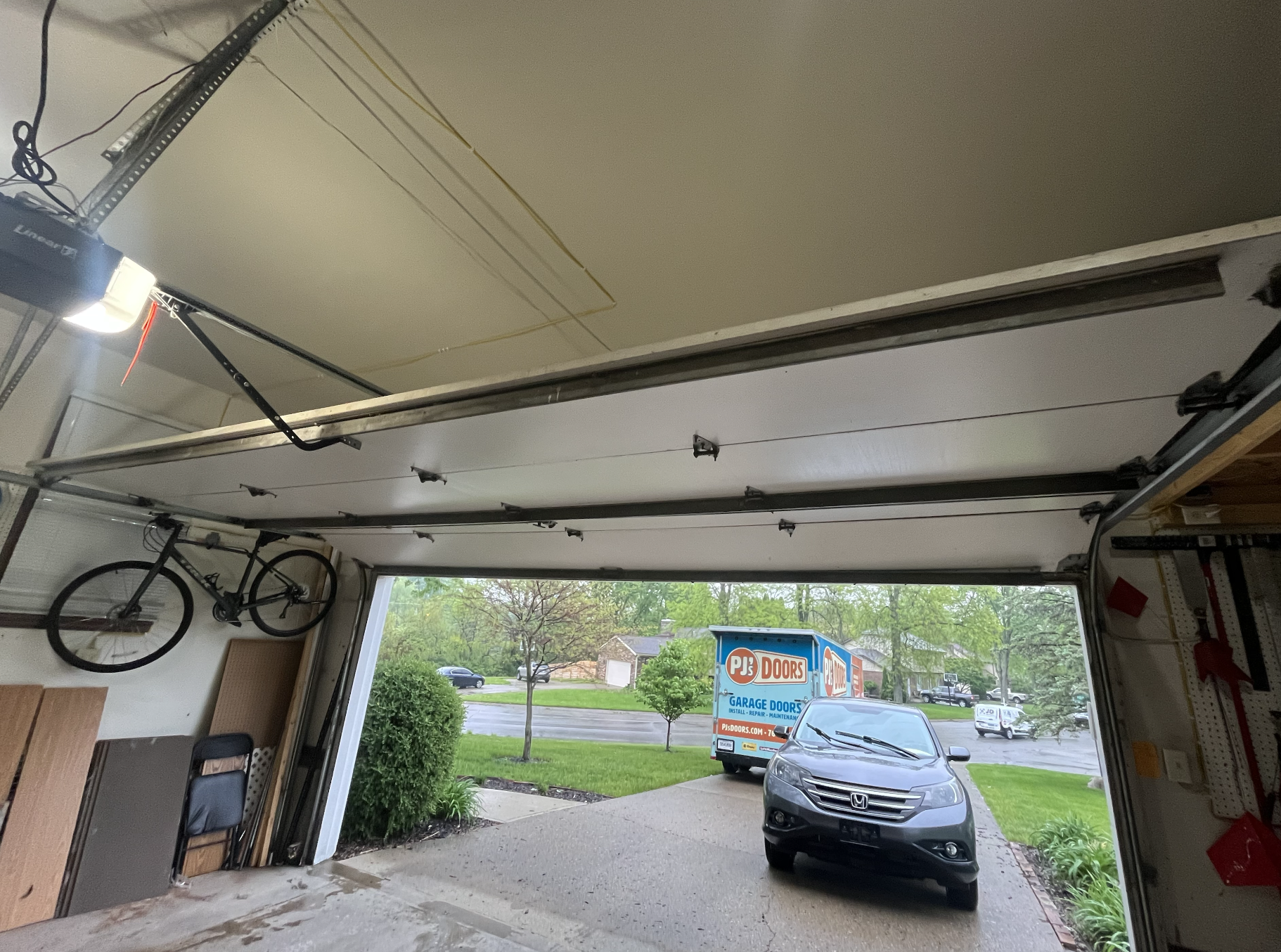
A sectional door is built from horizontal panels connected by hinges that lift up and roll back along overhead tracks, the same basic design as a residential garage door, scaled up and built tougher. It is the most common commercial door and the most versatile.
Best for: repair shops, auto dealerships, fire and EMS bays, dealership service lanes, and businesses that want a cleaner look with good insulation.
Strengths: strong insulation options for climate-controlled or comfortable spaces, a range of finishes and window options, and reliable everyday performance.
Trade-offs: needs overhead and back-room clearance for the tracks, and standard models are not as fast as a high-speed door.
If you want insulation and appearance along with durability, a sectional door is usually the answer.
High-speed doors
High-speed doors open and close far faster than a standard door, sometimes several feet per second. They are built for openings that cycle constantly and where every second of open time costs you in energy, climate control, or traffic flow.
Best for: high-traffic docks, food and pharma facilities, cold storage, clean rooms, and any opening that cycles dozens or hundreds of times a day.
Strengths: speed cuts energy loss and keeps conditioned or clean air in, reduces wait time for forklifts and traffic, and many models self-repair after a minor impact.
Trade-offs: the highest up-front cost, and it is overkill for a low-traffic opening.
If your team is standing around waiting for a door, or your heating and cooling is pouring out an opening that is constantly cycling, a high-speed door often pays for itself in productivity and energy savings.
A quick way to choose
Use this as a starting point, then let a professional confirm it against your actual building:
Security and durability first, tight on space? Roll-up (coiling) door.
Want insulation, a cleaner look, and everyday versatility? Sectional overhead door.
High traffic, energy loss, or climate control on the line? High-speed door.
Door size, wind load, insulation needs, and how the opening is framed all factor in too, which is why the smartest first step is having someone walk the opening with you.
Get the right door specified for your building
Choosing a commercial door is not just picking a type off a list, it is sizing the door, the springs, and the operator to the opening and the use so it lasts. PJ's Doors has installed and serviced commercial doors across Richmond and the surrounding Indiana and Ohio areas for more than 33 years, and our trained, licensed, and insured team will walk your building, tell you honestly which type fits, and spec it right the first time. Call 765-377-1000 or schedule a consultation.
Frequently asked questions
What is the most common type of commercial garage door? Sectional overhead doors are the most common because they are versatile, offer good insulation, and work for everything from repair shops to service bays. Roll-up doors are close behind for warehouses and security-focused openings.
What is the difference between a roll-up door and a sectional door? A roll-up (coiling) door is made of steel slats that coil into a barrel above the opening and use no overhead tracks, making it durable and space-saving. A sectional door uses hinged horizontal panels that lift and roll back on overhead tracks, offering better insulation and appearance.
Are high-speed doors worth the cost? For high-traffic or climate-controlled openings, often yes. The speed cuts energy loss and wait times, which adds up fast on a busy dock. For a low-traffic opening, a roll-up or sectional door is the better value.
Can you insulate a commercial garage door? Yes. Both roll-up and sectional doors come in insulated versions, which matters for climate-controlled spaces, employee comfort, and energy costs. We can spec the right insulation value for your building.
How do I know which commercial door my business needs? The best way is to have a professional walk the opening and factor in your traffic, security, insulation, and space. Call PJ's Doors at 765-377-1000 and we will help you choose and spec the right door.