
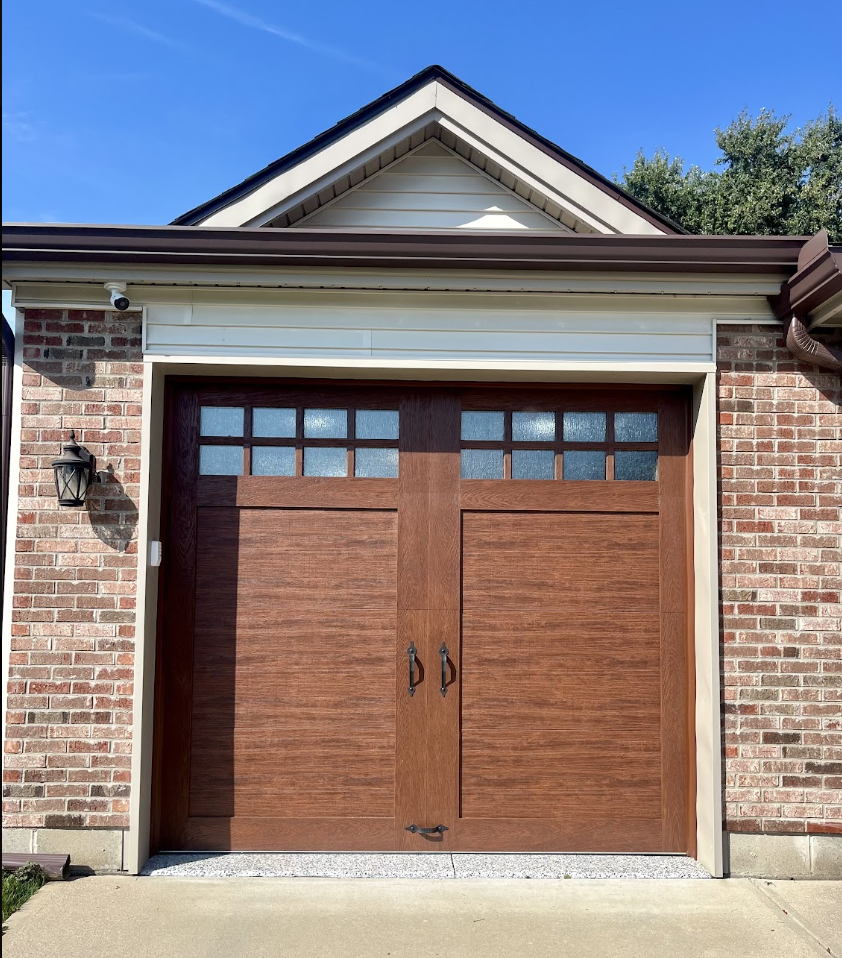
If you can see daylight under your closed garage door, cold air, rain, snowmelt, leaves, and mice can all get in the same way.
The fix is usually a new bottom seal, and sometimes a threshold seal on the floor to go with it.
Both cost very little next to what a drafty, wet garage costs you over a winter.
This post covers how to tell your seal is done, which one fits your door, when a threshold helps, and the one part of the job we tell homeowners to leave alone.
For the full range of seals around the door, see our garage door weather seals page.
The short answer
Replace the bottom seal when it is cracked, flattened, torn, or stiff, or when light shows under the closed door. Most steel garage doors take a rubber or vinyl seal that slides into an aluminum channel along the bottom, and swapping it is a reasonable job for a handy homeowner. Add a threshold seal on the floor if your slab is uneven or water runs toward the garage. Leave anything involving the bottom brackets or lifting cables to a technician.
Signs your bottom seal is worn out
Check these with the door closed, ideally on a bright day:
Light showing under the door, especially at the corners
Cracks, splits, or missing chunks in the rubber
A seal that is flat and hard instead of soft and rounded
Water, leaves, or snow inside the garage after a storm
A seal that sticks to the floor or tears when the door opens on a cold morning
Mouse droppings near the door
Rubber seals harden with age and sun. By the time one has been through a few Indiana winters it often stops squashing against the concrete and starts acting like a hard edge instead.
Which bottom seal fits your door
Bottom seals are not universal. Before you buy one, figure out how yours attaches.
Seals that slide into a channel
Most steel doors have an aluminum retainer along the bottom edge, a metal channel with one or two slots that the seal slides into. The common styles are:
T-style seals, with a flat T-shaped edge on each side that slides into a two-slot retainer
Bulb or bead seals, with rounded edges that slide into the slots instead of flat ones
J-style seals, which hook into a single-sided channel
The seal has to match the retainer. The easiest way to be sure is to take a short piece of the old seal with you, or look up the door manufacturer and model if there is a sticker on the inside of the door.
Measure the width of the door, and buy a seal a little longer than that so you can trim it to fit.
Seals that nail or screw on
Older wood doors often have a vinyl or rubber seal fastened straight to the bottom of the door. These are replaced by removing the old fasteners and attaching the new seal the same way.
How a bottom seal replacement goes
For a channel-style seal on a steel door, the process is straightforward:
Open the door to about waist height and keep it there. Unplug the opener and clamp the track below a roller on each side so the door cannot come down.
Slide the old seal out of the retainer. If it is stuck, a little soapy water helps.
Clean the channel out. Dirt and old rubber make the new seal hard to slide in.
Spray soapy water in the slots and feed the new seal in from one end. It helps to have a second person pulling while you feed.
Trim the ends, lower the door, and check for light at the corners.
Do it on a day above freezing if you can. Cold rubber is stiff and fights you the whole way.
The part to leave alone
The aluminum retainer is held on at each end by the bottom brackets, and those brackets are where the lifting cables attach. The cables are under spring tension any time the door is closed.
If the retainer itself is bent, corroded, or pulling away from the door, it needs replacing, and that means working around the bottom brackets. Loosening the wrong bolt on a bottom bracket can release cable tension suddenly and cause a serious injury. That part of the job is for a technician. Our garage door cable repair page explains why we treat cables and brackets so carefully.
If you are not sure what you are looking at, call us at 765-377-1000 before you start. We would rather talk you through it than have you guess.
When a threshold seal helps
A threshold seal is a rubber strip glued to the garage floor where the door closes. The bottom seal on the door presses down onto it. It does not replace the bottom seal. It works with it.
A threshold is worth adding when:
The slab is uneven, so the door seal cannot close the gap on its own
Water runs down the driveway and into the garage when it rains or melts
You want an extra barrier against snowmelt blowing under the door
It is less useful when the floor is level and a new bottom seal already closes the gap. Some homeowners also find a raised threshold a nuisance for rolling bikes, mowers, or a snowblower in and out.
Threshold seals are held down with adhesive, and most adhesives need the floor clean, dry, and above about 40 degrees to bond properly. That makes it a fall job. Try it in January and it usually lets go.
Seals and insulation work together
A new bottom seal makes a noticeable difference on its own. If the door itself is a thin, uninsulated steel door, though, the seal can only do so much. If you heat your garage or have a room above it, our page on insulated garage doors explains what an insulated door adds. And for the side and top seals around the door, our weatherstripping guide covers the rest.
Want it done for you?
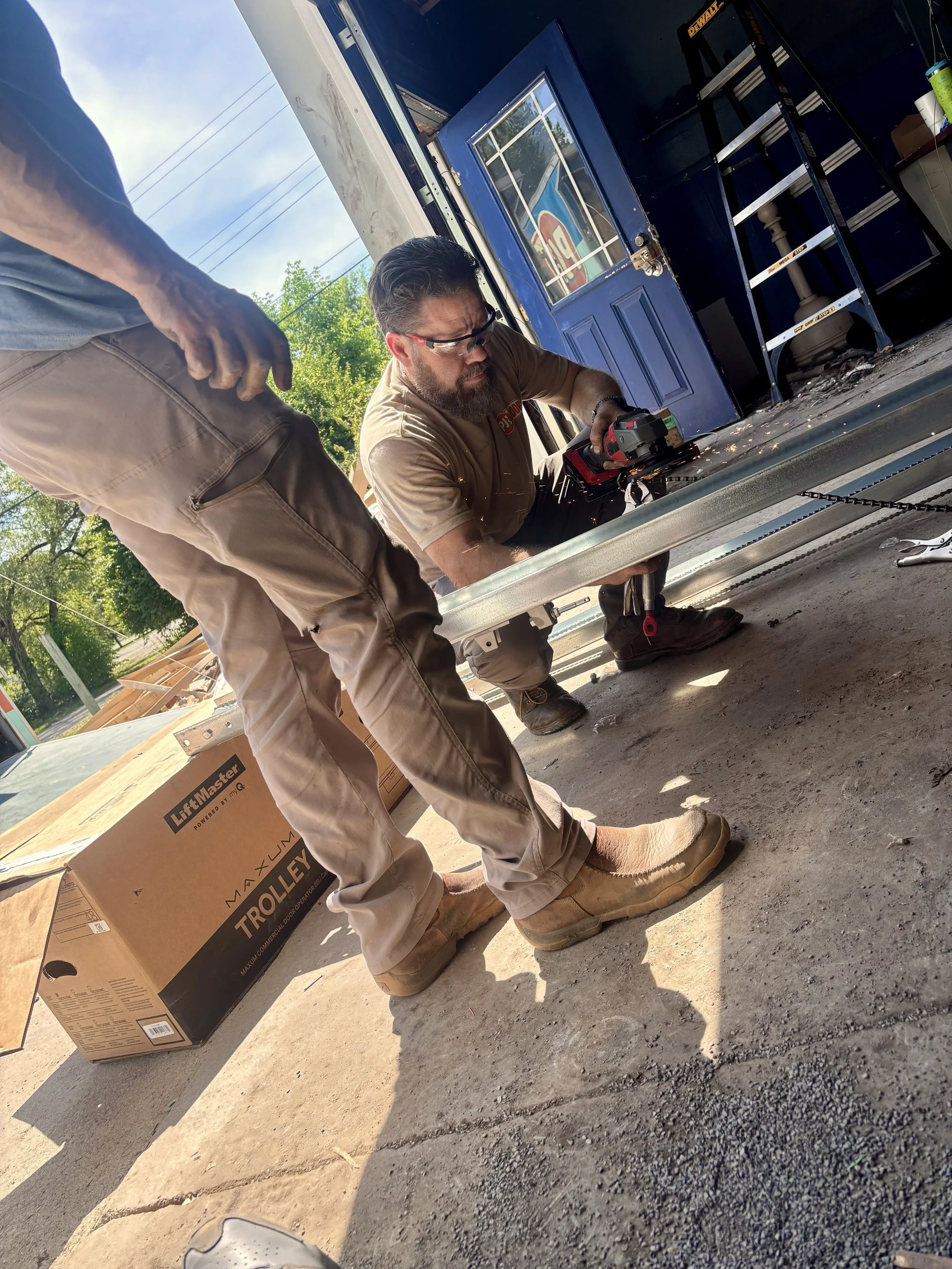
A seal replacement is a quick job for our technicians, and we check the rest of the door while we are there with our 27-point inspection.
If the retainer, brackets, or cables need attention, you will hear about it in plain English before we do any work. No upsells.
Call 765-377-1000 or schedule a free estimate online to get your door sealed before the deep cold.
We serve Richmond, Muncie, and the surrounding Indiana and Ohio areas. See all our weather seal services.
Frequently asked questions
How often should a garage door bottom seal be replaced?
There is no fixed schedule. Replace it when it is cracked, flattened, torn, or hard, or when you can see light under the closed door. Sun, cold, and age all wear rubber down, so check it every fall.
Can I replace a garage door bottom seal myself?
On most steel doors with a channel-style seal, yes, if you secure the door first and match the new seal to your retainer. Leave the job to a technician if the retainer is damaged or anything involves the bottom brackets, which are connected to the lifting cables.
How do I know which bottom seal to buy?
Look at how the seal attaches. Most steel doors use a T-style or bulb seal that slides into an aluminum retainer, and the seal has to match the slots. Bring a piece of the old seal to the store or check the door's manufacturer and model.
What is the difference between a bottom seal and a threshold seal?
A bottom seal attaches to the door. A threshold seal is glued to the floor under the door. The threshold gives the bottom seal something to press against, which helps on uneven floors and where water runs toward the garage.
Why does my garage door seal stick to the floor in winter?
Water gets under the seal during the day and freezes overnight, bonding the rubber to the concrete. Keep the threshold clear of slush, and replace a worn seal that lets extra water under the door. Do not force a frozen door open with the opener.
Do you replace garage door seals in Richmond and Muncie?
Yes. We replace bottom seals, threshold seals, and perimeter weatherstripping across Richmond, Muncie, and the surrounding Indiana and Ohio communities. Call 765-377-1000.