
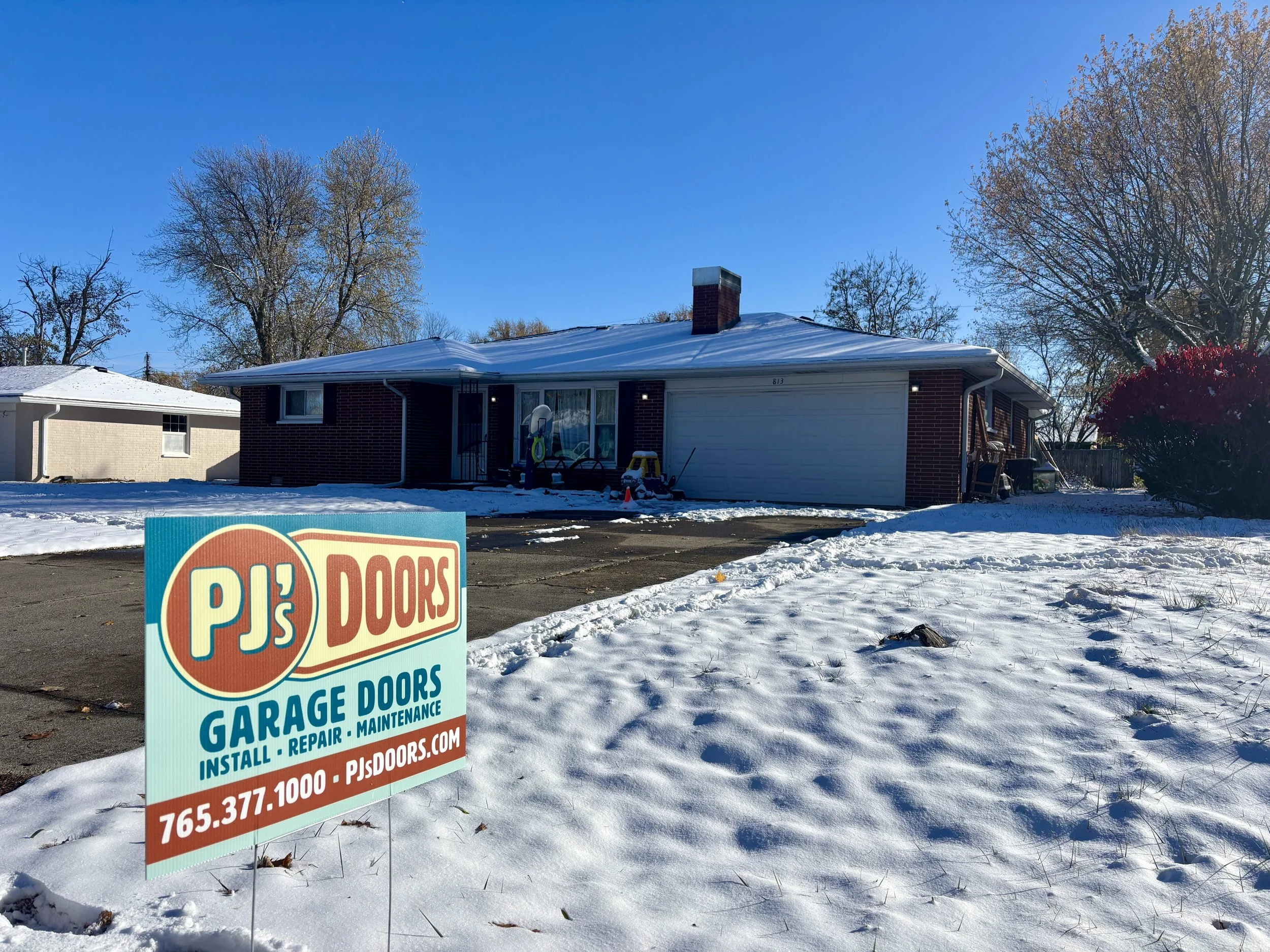
Cold on its own rarely breaks a garage door. What breaks them in an Indiana winter is everything that comes with the cold.
Snow gets piled against the door. A shovel or plow catches the bottom panel.
Ice builds up on the threshold. Road salt eats at the bottom edge of the steel all season.
None of those take much effort to prevent. Here is what to watch for and what to do about each one.
The short answer
Keep snow from piling against the door, keep the threshold clear of ice, never use the opener to break a frozen door free, rinse road salt off the bottom panel a few times a season, and replace a worn bottom seal before it fails. That covers most of the winter damage that can be prevented.
Snow piled against the door
When you shovel or plow a driveway, the snow has to go somewhere, and the spot right in front of the garage door is an easy place to put it. A few feet of heavy, wet snow leaning on a garage door puts steady pressure on the bottom panels. Garage door panels are built to be lifted and lowered, not to hold back a snowbank.
Over a winter that can bend the bottom section inward, crack the panel at the hinge line, or push the bottom of the door out of line with the tracks. The first sign is usually a door that starts rubbing or binding near the floor.
What to do:
Pile snow at least a few feet away from the door, not against it
If a drift builds up against the door overnight, clear it by hand before you open the door
Do not open the door into a drift. The door tries to lift the snow on its way up, which strains the opener and the bottom panel together
Shovels, snowblowers, and plows
The bottom of a garage door takes a beating in winter. A shovel blade jammed under the seal, a snowblower run right up to the threshold, or a plow that clips the corner can tear the bottom seal, dent the bottom panel, or bend the bottom bracket that holds the lifting cable.
That last one is worth knowing about. The cable attaches to the bottom bracket on each side, and the bracket is under spring tension. A bent bracket is not something to straighten with a hammer. If you see one, leave the door closed and call us at 765-377-1000. We will replace the bracket and check the cable before anyone runs the door again.
If you use a plow service, it is worth a quick word with the driver about leaving a strip clear in front of the door.
Ice on the threshold and the seal
Melting snow runs under the door during the day and freezes again at night. That builds a ridge of ice along the threshold, and sometimes it freezes the bottom seal straight to the concrete.
Two problems come from that. A door frozen to the floor can tear its seal or strain the opener when it tries to lift. And a ridge of ice makes the door meet resistance before it reaches the floor, so the opener thinks something is in the way and reverses.
Chip the ice away carefully with a plastic tool rather than a metal one, and keep the threshold clear through the season. If your door is already stuck, our post on freeing a garage door that is frozen shut walks you through it without damaging anything.
A worn or cracked bottom seal lets more water in, which means more ice. Replacing it before the deep cold is one of the cheapest things you can do for your door. We cover the options on our weather seals page.
Road salt on the bottom panel
Salt does its damage slowly. Every time you pull a car in, salty slush drips off it onto the garage floor and splashes up on the inside of the bottom panel. Out front, salt from the driveway and street ends up along the bottom edge of the door.
Most residential garage doors are steel with a painted finish. Once salt gets through a chip or scratch in that finish, rust starts along the bottom edge, which is the same spot that already takes the most abuse. You will see it as bubbling paint or orange staining on the lowest section.
What helps:
Rinse the bottom of the door, inside and out, with plain water a few times over the winter and once in spring
Touch up chips in the paint before winter so salt cannot get into bare steel
Squeegee or sweep slush away from the door on the inside so it does not sit against the panel
If rust has already started along the bottom, the section can often be replaced without replacing the whole door. Our garage door panel replacement page explains when that makes sense.
Ice and snow around the sensors
The safety sensors sit a few inches off the floor on either side of the door. That puts them right where snow gets kicked up and where slush splashes. A sensor covered in snow or ice cannot see its partner, and the door will not close.
Keep the area around both sensors clear and wipe the lenses if the door starts reversing. It is a good habit to check them after any snow you have shoveled near the door.
Icicles and the area above the door
If your gutters overflow above the garage, icicles and dripping meltwater land right on top of the door and the header. Water that gets into the top of the door frame can freeze around the top rollers and the opener arm. Keeping gutters clear in the fall, and knocking down large icicles carefully from a safe spot, keeps that from becoming a problem.
When it is time to call
Most snow and ice problems can be prevented. Some damage still needs a technician:
A bottom panel that is bent, cracked, or pushed inward
A bent bottom bracket or a frayed cable at the bottom corner
A door that rubs, binds, or sits crooked after a hard winter
A seal that is torn or missing in sections
When you call PJ's Doors, you get a local person, not a call center. We will look at the whole door during our 27-point inspection, tell you what is actually damaged and what is fine, and give you options in plain English.
Call 765-377-1000 or book a visit online. We serve Richmond, Muncie, and the surrounding Indiana and Ohio communities, and same-day service is available for most garage door repairs.
Frequently asked questions
Can snow piled against a garage door damage it?
Yes. Heavy, wet snow leaning against the bottom panels puts pressure on a part of the door that was not built for it. Over a winter it can bend or crack the bottom section and push the door out of line with its tracks. Keep piles a few feet away from the door.
How do I keep ice from building up under my garage door?
Clear snow and slush away from the threshold during the day so it cannot freeze there at night, and keep the bottom seal in good shape so less water gets under the door. If ice does form, chip it off with a plastic tool. Avoid metal tools, which can cut the seal.
Does road salt damage garage doors?
It can. Salt causes rust once it gets past the paint on a steel door, usually along the bottom edge. Rinsing the bottom of the door with water a few times each winter and touching up paint chips before the season helps a lot.
Should I open my garage door if there is a snow drift against it?
Clear the drift by hand first. Opening a door into a drift makes the opener lift the snow along with the door, which strains the opener and the bottom panel.
Can a damaged bottom panel be replaced on its own?
Often, yes. If the rest of the door is in good shape and the panel is still available, replacing just the damaged section is usually the less expensive option. We will tell you honestly if a full replacement makes more sense.