
Garage Door Frozen Shut? Here Is How to Free It Without Doing Damage
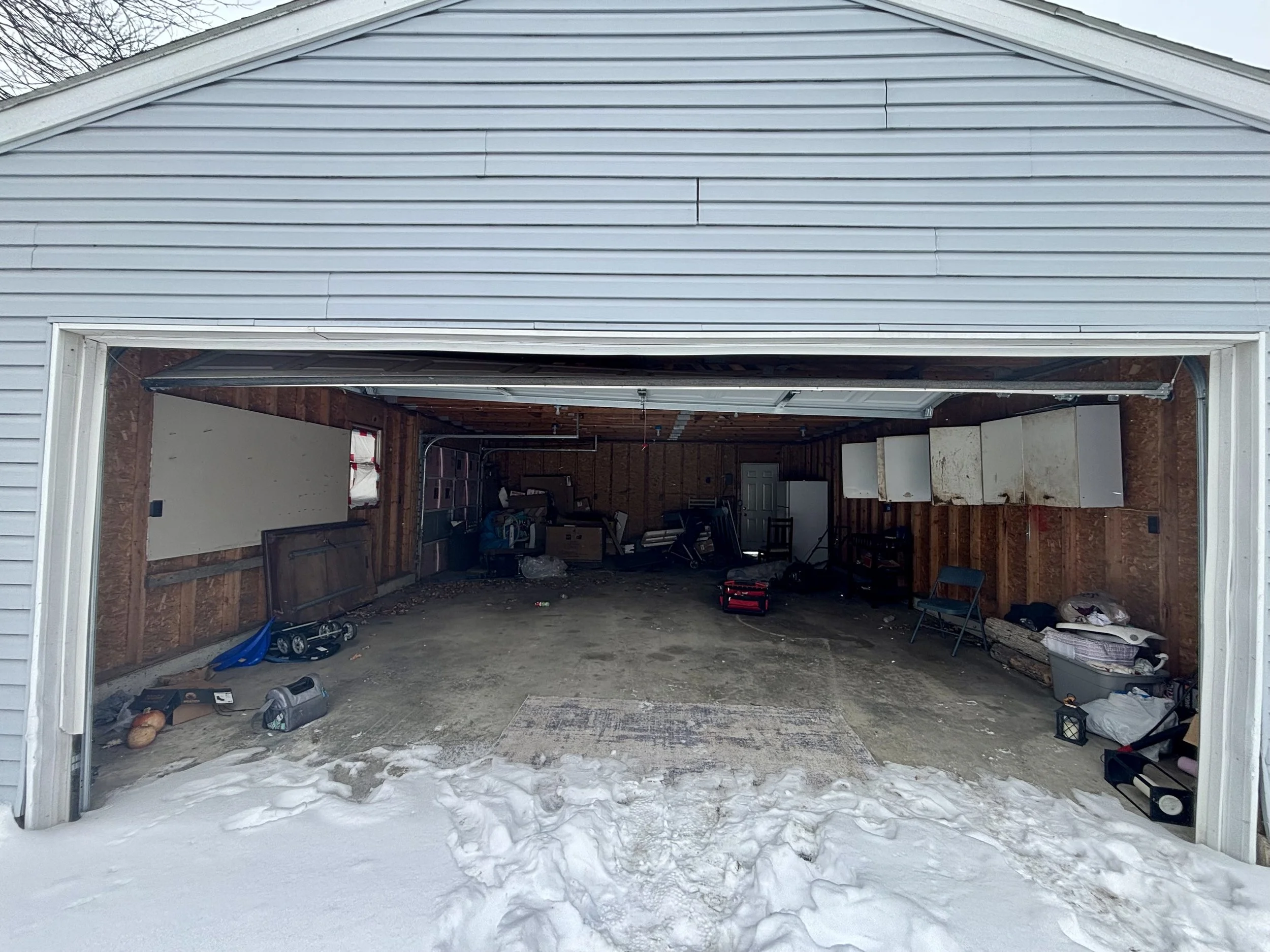
A garage door freezes shut when meltwater runs off the door, pools under the rubber bottom seal, and refreezes overnight.
The door is not broken. It is glued to the concrete by a thin sheet of ice, and the single worst thing you can do is stand there pressing the remote.
Every time you do, the opener hauls on a door that cannot move, and what usually gives is the bottom seal, the bottom bracket, or a cable coming off its drum. That turns a five minute problem into a repair bill.
Here is the order to work through it.
First, stop using the opener
One attempt tells you what you need to know. If the door strains, hums, or lifts an inch and stops, it is frozen down. Let go of the button.
Most openers have a force setting that is supposed to stop them from pulling against an obstruction, but ice does not behave like a box in the doorway. It gives a little, then holds, and the opener keeps pulling. Repeated attempts are how a frozen door becomes a cable job.
Break the ice loose at the seal
The goal is to release the seal from the slab, not to melt every bit of snow around the door.
A hair dryer or a heat gun on low is the safest tool. Work along the bottom edge where the rubber meets the concrete, keeping the heat moving so you do not cook the rubber in one spot. On a light freeze this takes a couple of minutes.
Warm water, used carefully, works as a backup. Pour it along the seam where the seal meets the floor, then immediately squeegee or sweep the water away from the door so it does not refreeze into a thicker sheet. Use warm rather than boiling, and only if you can clear the runoff. In single-digit temperatures this often makes things worse, so reach for the hair dryer instead.
A plastic putty knife or an ice scraper can work the seam once the ice has softened. Slide it along the joint, do not chisel. A metal blade against a rubber seal is how seals get sliced.
Commercial de-icer or a windshield washer fluid rated for cold poured along the seam is fine. Skip rock salt near the door. It eats at concrete over time and it accelerates rust on the bottom bracket, the track, and the fasteners right where you are putting it.
Never use an open flame. A propane torch near a rubber seal, a wooden jamb, and whatever is stored in the garage is not worth the shortcut.
If the door still will not move, go manual
Pull the emergency release cord, the red handle hanging from the opener rail, and try lifting the door by hand. Sometimes the extra leverage and the different angle breaks the last of the ice loose when the opener could not.
Two things to watch for while you have it disconnected. If the door feels genuinely heavy, or slams down when you let go, stop. That is a spring problem, not an ice problem, and it needs a technician rather than more effort. And once the door is free and running normally again, re-engage the opener by running it through one full cycle so the trolley locks back onto the carriage.
Once it is open, deal with what caused it
A door that froze once will freeze again in the same spot. Before you close it that evening:
Sweep or squeegee any standing water and slush out of the doorway.
Wipe the bottom seal dry.
Run a light coat of silicone spray along the underside of the seal. It helps water bead off instead of sitting under the rubber. Petroleum-based lubricants degrade rubber over time, so silicone is the right choice here.
If the concrete has a low spot that holds water at the door, that is the real culprit and it will keep doing this all winter.
Preventing it for the rest of the season
The single biggest factor is the condition of the seal itself. A seal that has hardened, cracked, or flattened out no longer compresses evenly against the floor, which leaves gaps that trap water in exactly the wrong place. Rubber stiffens with age and UV exposure, and a seal that looked fine two winters ago may not seal at all now. Replacing a bottom seal is inexpensive and it is the fix that actually solves this. Our guide to weatherstripping and seals covers what the different types do.
Beyond the seal, keep the gutter or roofline above the door draining away from the opening rather than dripping in front of it, and keep the doorway clear of packed snow.
When to call us instead
Call if the door will not free up after the ice is gone, if it feels heavy off the emergency release, if it moves crooked or scrapes, or if you can see a cable that has come loose from its drum. Those are not ice problems any more.
We run garage door repair across Richmond, Muncie, and the surrounding Indiana and Ohio areas all winter. Worth knowing: a fall tune-up that catches a worn seal costs a fraction of a January cable repair, and it is the same seal either way. 765-377-1000.
Frequently asked questions
How do I open a garage door that is frozen shut? Stop using the opener. Free the bottom seal from the concrete with a hair dryer or heat gun on low, or warm water that you immediately sweep away. Once the seal releases, the door lifts normally.
Can I pour hot water on a frozen garage door? Warm water works if you clear the runoff right away so it does not refreeze into a thicker sheet. Avoid boiling water, and skip this entirely in very low temperatures where a hair dryer is the better tool.
Will forcing a frozen garage door damage it? Yes. Repeatedly running the opener against a frozen door commonly tears the bottom seal, bends the bottom bracket, or pulls a cable off its drum. One attempt to confirm it is stuck is enough.
Why does my garage door keep freezing to the ground? Water is pooling under the bottom seal and refreezing. Usually that is a worn or hardened seal that no longer compresses evenly, a low spot in the concrete at the doorway, or roof runoff draining right in front of the door.
Does salt help with a frozen garage door? Skip rock salt near the door. It works on the ice but it damages concrete over time and speeds up rust on the bottom bracket, track, and hardware. A commercial de-icer or cold-rated washer fluid is a better choice.