
Why Garage Doors Break Down in Winter (and What to Do About It in October)
Cold weather does not reach out and break a healthy garage door. What it does is find every part that was already worn, already dry, already near the end of its life, and push it over the edge on the same week. That is why our phone rings hardest the morning after the first hard freeze, and why a door that seemed perfectly fine in September suddenly will not budge in December. The good news is that the failures are predictable, which means most of them can be headed off with an hour of garage door maintenance before the weather turns.
Here is what actually happens to a door when the temperature drops, in the order we see it fail.
Springs snap first, and cold is the trigger rather than the cause
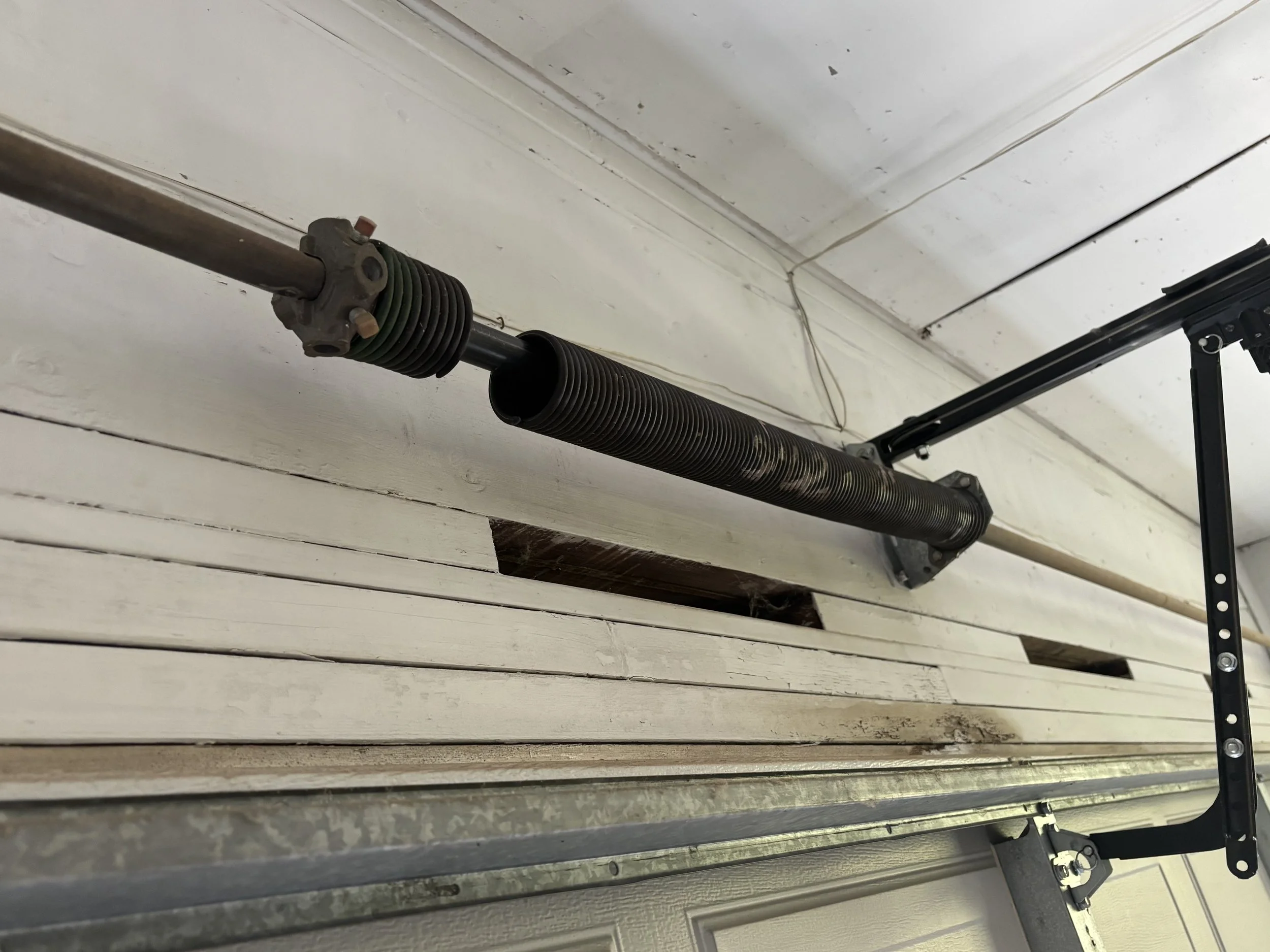
The torsion springs above your door carry almost the entire weight of it. They are wound steel under constant load, and they are rated in cycles rather than years, commonly around ten thousand open-and-close cycles for a standard spring. A door used four times a day burns through that in roughly seven years.
Cold does not wear a spring out. What it does is take a spring that was already at the end of its cycle life and add the last bit of stress. Steel gets less forgiving as it gets colder, the metal contracts, and the load on a tired spring goes up right when its tolerance goes down. That combination is why spring failures cluster in the first genuinely cold week of the season rather than spreading evenly through the year.
You usually get warning. A door that has started closing faster than it used to, that feels heavy when you lift it by hand, that has a visible gap in the coil, or that opens crooked is telling you the spring is going. If you see any of that now, a planned spring replacement in October costs the same as an emergency one in January and does not leave your car locked in.
Old grease turns to glue
This one surprises people. Lubricant that works fine at seventy degrees thickens considerably near freezing. If the previous owner or a well-meaning helper packed the tracks and rollers with heavy grease, that grease stiffens in cold weather and the door starts dragging through it.
The opener feels that drag as resistance. Since every modern opener is built to reverse when it senses an obstruction, a door dragging through stiff grease will often stop partway or bounce back up, and the homeowner assumes the opener has failed when the opener is doing exactly its job.
The fix is straightforward. Clean the old buildup out of the tracks, since tracks are meant to be clean and dry rather than greased, and use a garage door lubricant or a silicone spray on the rollers, hinges, and springs instead of heavy grease. Our preventive maintenance guide covers what to lubricate and what to leave alone.
The bottom seal freezes to the concrete
A rubber bottom seal is designed to compress against the floor and keep weather out. When melting snow runs off the door, pools under that seal, and then refreezes overnight, the seal becomes glued to the slab.
What happens next is worse than being stuck. The opener pulls hard against a door that is frozen down, and something has to give. Usually it is the seal tearing loose, but we have seen it pull the bottom bracket, stretch a cable off its drum, or strain the opener. A cracked or hardened seal makes it more likely, since a seal that has lost its flexibility does not shed water the way a good one does. Replacing a worn bottom seal and weather seal in the fall is one of the cheapest pieces of winter insurance on the whole door.
Everything electronic gets less reliable
Two cold-weather problems look like a broken opener and are not.
Remote and keypad batteries lose voltage as they get cold, which is why a remote that works fine from inside the warm house is dead from the driveway on a January morning. Fresh batteries in the fall, in both the remote and the outdoor keypad, take that off the table.
The other is sensor alignment. The safety sensors near the floor sit on metal brackets, and metal contracts in cold. A sensor bracket that was borderline aligned in October can drift just enough by January to break the beam, and the door refuses to close. If your door starts reversing on cold mornings and closing normally in the afternoon, temperature-driven sensor drift is a strong suspect.
Metal contracts, and everything gets tighter
Track sections, hinges, rollers, and brackets all shrink slightly in cold. Individually that is nothing. Across a whole door it means clearances tighten, a track that was slightly out of alignment binds, a hinge with wear starts to bind, and a roller with a failing bearing seizes. Doors that sounded a little rough in the fall get loud in the winter, and loud is the sound of parts working against each other.
That is the thread running through all of this. Cold weather is not really a separate category of garage door problem. It is an amplifier. Anything worn, dry, misaligned, or overdue gets found out.
The October checklist
Everything on this list is worth doing before the first freeze, and most of it takes an hour.
Pull the emergency release and lift the door by hand. It should feel light and stay put around waist height. Heavy or falling means a spring problem.
Clean the tracks and lubricate rollers, hinges, and springs with a garage door lubricant or silicone spray, not heavy grease.
Check the bottom seal for cracks, gaps, and hardening. Replace it if it no longer compresses.
Sweep and clear the area where the door meets the concrete so water does not pool and refreeze.
Put fresh batteries in every remote and keypad.
Watch a full close cycle and check that both sensor lights hold steady.
Tighten visibly loose bolts on hinges and brackets. Leave anything on the spring assembly alone.
If the door passes all of that, you are in good shape for the season. If it does not, now is a much better time to deal with it than at six in the morning in a snowstorm.
What to do if it has already failed
If your door is already stuck, already heavy, or already making a noise it did not make last month, do not keep cycling it. A door with a broken spring or a cable off its drum gets more expensive every time it is forced. Pull the release, leave it alone, and get somebody out to look at it.
We handle garage door repair across Richmond, Muncie, and the surrounding Indiana and Ohio communities, and we keep emergency and same-day repair staffed through the winter because we know what the first cold snap does around here. The number is 765-377-1000.
Frequently asked questions
Why does my garage door work fine in summer but not in cold weather? Cold does not create new problems, it exposes existing ones. Thickened lubricant, a spring near the end of its cycle life, a hardened bottom seal, weak remote batteries, and slight sensor drift from metal contraction all show up at once when the temperature drops.
Do garage door springs really break more in winter? Spring failures do cluster in the first hard freeze. The spring was already worn from years of cycles, and the cold adds the last bit of stress. A spring that is already near the end of its life is the one that goes.
What lubricant should I use on a garage door in winter? A garage door lubricant or a silicone-based spray on rollers, hinges, and springs. Avoid heavy grease, which thickens in cold and makes the door drag. Tracks should be clean and dry rather than lubricated.
How do I stop my garage door from freezing to the ground? Keep the area where the door meets the concrete clear of standing water and slush, and replace a bottom seal that has cracked or hardened. A seal in good condition sheds water instead of trapping it.
My garage door reverses on cold mornings but works fine later. Why? Two likely causes. Either lubricant has thickened enough that the opener reads the drag as an obstruction, or metal contraction has nudged a safety sensor out of alignment. Both are quick to check.
When should I schedule winter garage door maintenance? October is ideal in Indiana and Ohio. It is early enough to catch a failing spring or seal before you need the door, and it means you are not competing with everyone else's emergency after the first freeze.