
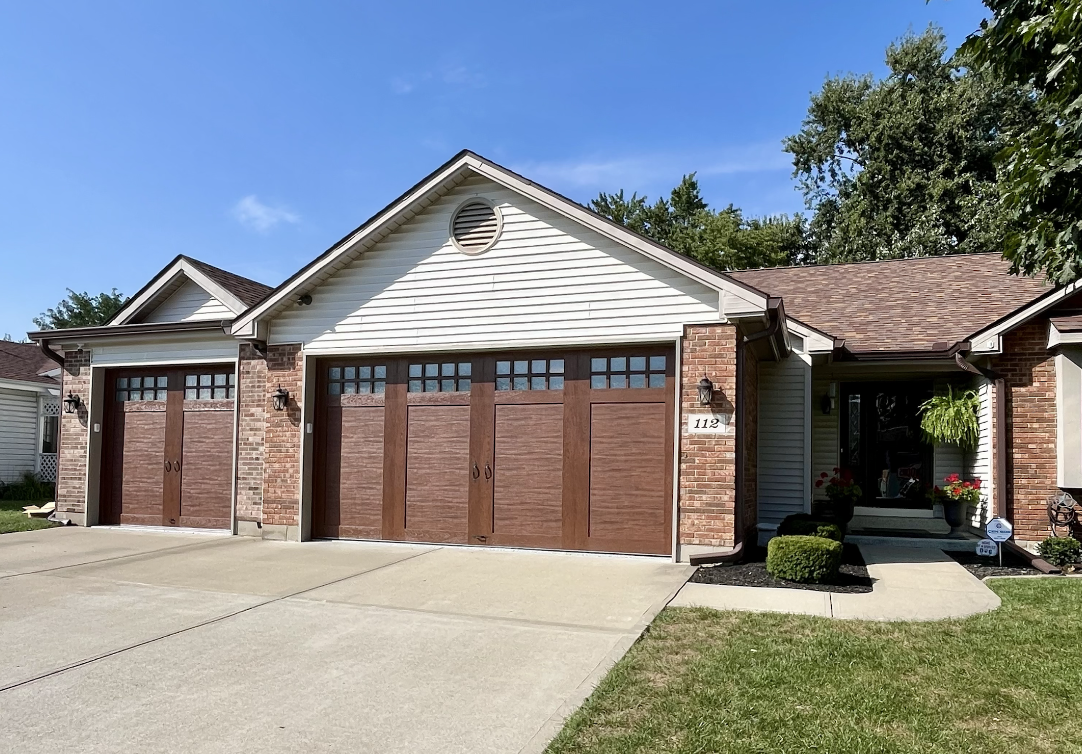
The door closed fine all summer. Now it is November, and three mornings a week it rolls down, touches the floor or gets close, and goes right back up. By the afternoon it works again.
That pattern is the clue. If a door only acts up when it is cold, the cause is almost always something the cold changes: the sensors, the seal at the bottom, the grease, or how hard the opener has to work. Most of it you can check in ten minutes. Some of it you should not try to fix yourself.
If your door will not close at all for any reason, start with our general guide on why a garage door won't close. This post is about the cold-weather version.
The short answer
A garage door that will not close in the cold is usually doing what it was designed to do. Every modern opener reverses when the safety sensors lose sight of each other or when the door meets more resistance than it expects. Cold weather causes both. Frost and low winter sun confuse the sensors, and a stiff seal, thick grease, or a frozen threshold adds resistance the opener reads as an obstruction.
Check the sensors first
The two small sensors near the floor on each side of the door send an invisible beam across the opening. If anything breaks that beam while the door is coming down, the door reverses. In winter, three things break it that never bother you in summer.
Frost and condensation on the lenses
When a warm garage meets a freezing morning, moisture condenses on anything cold, including the sensor lenses. A thin film of frost is enough to scatter the beam. Wipe both lenses with a dry cloth and try again. If it closes, you found it.
Low winter sun
This one surprises people. In November and December the sun sits low in the sky, and on a garage that faces east or west it can shine straight into the receiving sensor at certain times of day. The sensor sees sunlight instead of its own beam and stops the door. If your door only refuses to close at the same time on sunny mornings, that is very likely the cause. A small shade or moving the sensors to the opposite sides of the door usually fixes it for good.
Brackets that drift as metal contracts
The sensors sit on thin metal brackets, and metal shrinks a little in the cold. A sensor that was barely lined up in October can be knocked just far enough out of line by January to lose the beam. Most sensors have an indicator light. If one is blinking or off while the other is steady, the pair is out of alignment.
If the lenses are clean, the sun is not the issue, and the lights still will not hold steady, the sensor itself or its wiring may be failing. Our garage door sensor repair page explains what we check and replace.
Then look at the bottom of the door
A stiff or frozen bottom seal
The rubber seal along the bottom of the door gets hard in the cold. A hard seal hits the concrete like a solid object instead of squashing flat, and some openers read that as hitting something. If there is ice or packed snow along the threshold, the door meets it even sooner and reverses before it is fully down.
Clear the threshold of ice and snow. If the seal is cracked, flattened, or hard as a hose, it is due for replacement before the season gets worse.
The door closes, then comes right back up
If the door makes it all the way to the floor and then reverses, the opener thinks the floor is an obstruction. A stiff seal and a slightly tighter door change where the door meets the floor, so it hits the concrete before the opener's close limit says it should and reverses. That is an adjustment to the close limit on the opener, covered in your opener's manual. If you are not comfortable making it, it is a quick fix on a service call.
Cold grease and the force setting
Old grease on the rollers, hinges, and opener rail thickens as it gets cold. The door gets harder to move, and the opener feels that extra drag on the way down. If the drag crosses the opener's force limit, the door reverses partway down for no visible reason.
Two things help. Clean the old grease off the rollers and hinges and use a garage door lubricant that stays thin in the cold, not general purpose grease. And if the door still reverses, the force setting on the opener may need a small adjustment.
Be careful here. Turning the force all the way up to make a door close is how people end up with a door that will not reverse when it should. If the door is that hard to move, something else is wrong, usually the springs or the tracks, and more force only hides it. The same issue on the opening side is covered in our post on a garage door that won't open in cold weather.
The test that tells you if it is the door or the opener
Pull the red emergency release cord with the door fully closed, then lift the door by hand to about waist height and let go.
A balanced door stays put or drifts slowly. A door that drops, or that feels much heavier than it should, has a spring problem. Cold is hard on springs, and a weak spring makes the opener work harder in both directions. That is not something to adjust yourself. Reconnect the door to the opener and call us.
If the door moves smoothly and stays balanced, the problem is on the opener side: sensors, limits, or force.
When to stop and call
A sensor wipe, clearing the threshold, and fresh lubricant are fair game for any homeowner. Stop and call if:
The door feels heavy or uneven when you lift it by hand
You hear a loud bang from the garage, which is often a spring breaking
One side of the door sits lower than the other
The sensors still blink after cleaning and lining them up
The door is stuck partway open and you cannot close it safely
That last one is the one that matters in winter. A door that will not close leaves the garage open overnight in the cold, and that is when people start pushing it down by hand or holding the wall button to override the sensors. Please do not. If the door will not close and you need it secured, our emergency and same-day repair team can usually get out the same day.
For everything else, you can schedule a visit online and we will come out, find the actual cause, and set up the sensors, limits, and force for winter so it does not keep happening.
Get it closing again
When you call PJ's Doors, a real person picks up. We will ask a few questions about what the door is doing, and sometimes we can tell you right there on the phone whether it is something you can fix in five minutes. If it is not, our technician will run our 27-point inspection, explain what is wrong in plain English, and fix it right.
Call 765-377-1000 or schedule your visit here. We cover Richmond, Muncie, and the surrounding communities in eastern Indiana and western Ohio. See all our garage door repair services.
Frequently asked questions
Why does my garage door only reverse when it is cold?
Cold affects the parts that tell the opener when to stop. Frost on the sensor lenses, low sun shining into a sensor, a stiff bottom seal, and thick grease all cause the opener to sense an obstruction and reverse. When it warms up later in the day, the problem goes away.
Can the sun really stop my garage door from closing?
Yes. When the winter sun is low and shines directly into the receiving sensor, the sensor can miss its own beam and stop the door. It tends to happen at the same time of day on clear mornings or evenings. A shade over the sensor, or swapping which side the sending and receiving sensors are on, usually fixes it.
Should I turn up the force setting so the door closes in winter?
Only a small amount, and only if the door moves freely by hand. A big increase can stop the door from reversing when it should, which is a safety risk. If the door needs a lot of force to close, the springs or tracks need attention.
How do I clean garage door sensors?
Wipe both lenses gently with a soft, dry cloth. Check that nothing is blocking the path between them, including snow, leaves, or items stored near the door. Then make sure both indicator lights are steady. A blinking light usually means the pair is out of alignment.
Is it safe to hold the wall button to force the door closed?
On most openers, holding the wall button overrides the sensors so the door will close. That is meant for emergencies, with someone watching the door the whole way down. Do not make it a habit. The sensors are there to keep the door from closing on a person, a pet, or a car.
Do you repair garage doors that won't close in Richmond and Muncie?
Yes. We repair sensors, openers, springs, and seals across Richmond, Muncie, and the surrounding Indiana and Ohio areas, with same-day service available for most repairs. Call 765-377-1000.