
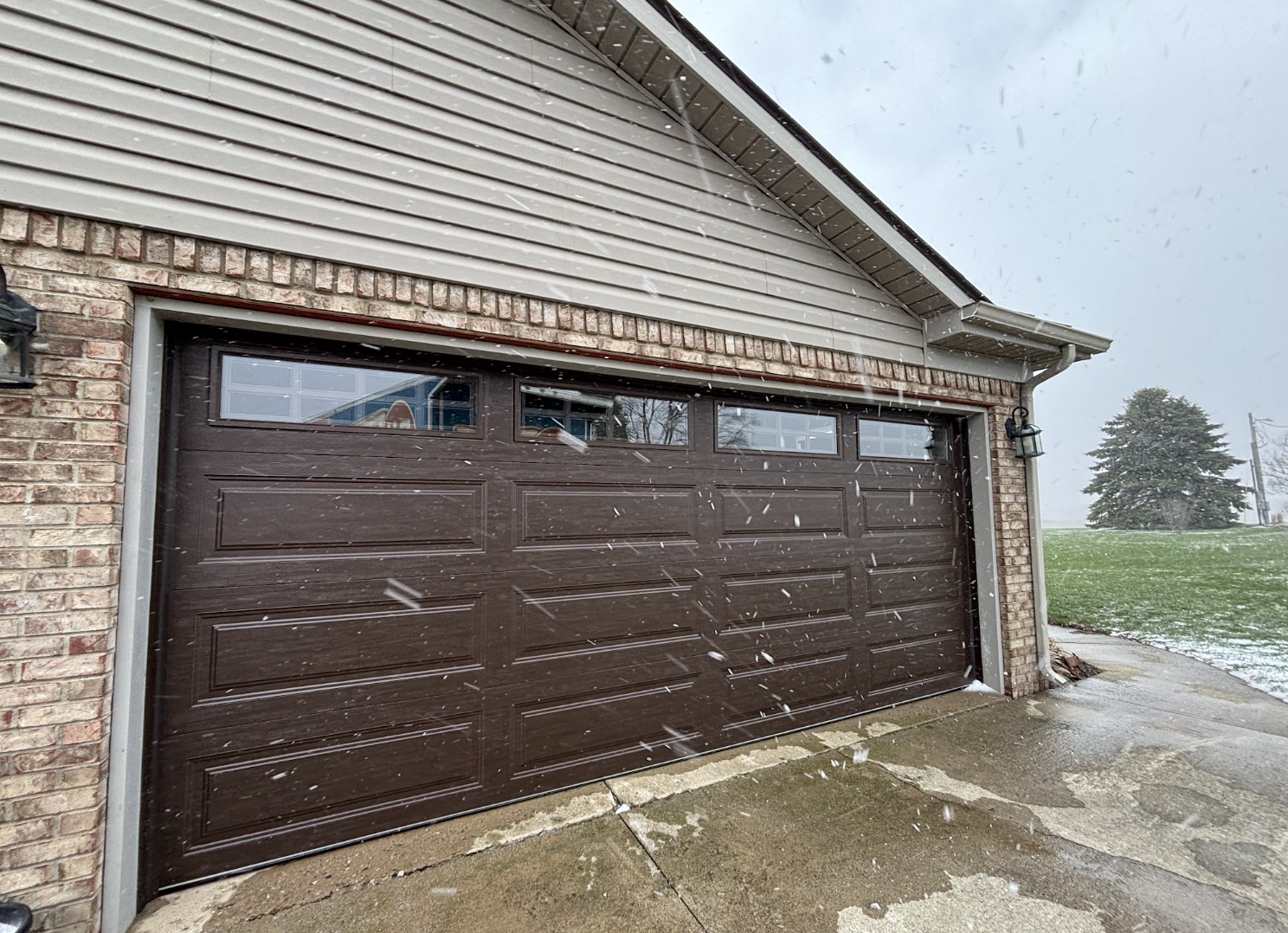
A residential garage door that quits in January is a bad morning. A commercial overhead door that quits in January is lost heat, a truck that cannot unload, and staff standing around waiting for it to open.
Commercial doors also see a lot more use than a homeowner's door. A shop or warehouse door might cycle dozens of times a day, and every one of those cycles is harder on the parts when it is cold. The time to get ahead of that is before the first hard freeze, not after.
Here is the winter checklist we go through on commercial doors. Some of it your maintenance staff can handle. Some of it should be done by a technician.
The short answer
Before winter, check the weather seals on every door, have the springs and cables inspected, switch to a lubricant that stays thin in the cold, test the operator and every safety device, and clear anything that lets ice build up in the tracks or guides. Then keep the doors closed as much as the work allows. For the year-round version, see our commercial garage door maintenance guide.
1. Weather seals
Seals are where a heated building loses money. A big overhead door with a worn bottom seal or gaps along the sides lets cold air in all day, even when the door is shut.
Check:
The bottom seal, for cracks, flat spots, and gaps at the corners
The side and top seals on sectional doors
The brush or vinyl seals in the guides on roll-up doors
Daylight around any part of the closed door
On sectional doors, the bottom seal often needs replacing every few winters on a busy door. On roll-up doors, worn guide seals are easy to overlook and let in a steady draft.
2. Springs and cables
Cold is hard on springs, and a commercial door puts far more cycles on its springs than a home door does. A spring that is near the end of its life is more likely to give out on a cold morning.
Have a technician check the springs and cables before winter. On a high-traffic door, it is also worth asking whether higher-cycle springs make sense when the current ones are replaced. They cost more up front and last much longer on a door that runs all day.
Spring and cable work on commercial doors is not a maintenance-staff job. The springs on a large commercial door are under serious tension. If one breaks, leave the door where it is and call us at 765-377-1000.
3. Lubrication
Grease that works fine in August turns thick in January, and a door that is fighting its own lubricant is harder on the operator, the springs, and the rollers.
Before winter:
Clean old, gummy grease off rollers, hinges, and bearings
Use a lubricant rated for cold weather on rollers, hinges, and spring coils
On roll-up doors, follow the manufacturer's guidance for the curtain and guides. Some should be kept dry and clean rather than greased, because grease collects grit
4. The operator
Commercial operators do a lot of work in winter. Test each one before it gets cold:
Does the door open and close fully without hesitating or straining?
Are the limits set so the door closes tight to the floor without bouncing back up?
Is there any grinding, clicking, or burning smell from the motor?
On doors with a brake, does it hold the door without drifting?
A door that strains in the cold is often telling you about a spring or track problem, not the operator. Turning up the force setting to make it close usually just moves the damage somewhere else.
5. Safety devices
Photo eyes and reversing edges matter more on commercial doors, where forklifts, trucks, and people are moving through the opening all day. Cold weather causes two common problems:
Photo eyes fog, frost over, or get knocked out of line by equipment, so the door refuses to close
Rubber reversing edges stiffen in the cold and may not register contact the way they should
Clean the photo eyes, check their alignment, and test the reversing edge with an object before winter. If a safety device is damaged, repair it. Never bypass it to keep the door running.
6. Tracks, guides, and the threshold
Snow and ice around the bottom of a commercial door are a common winter problem. Meltwater runs into the bottom of the guides or tracks, refreezes overnight, and the door binds or jams.
Keep snow plowed and piled away from door openings
Clear ice from the threshold and the bottom of the tracks or guides
Check that the floor drains near the doors are not blocked
7. Keep the doors closed when you can
This is not a repair, but it makes a real difference. Every minute a large door stands open in January lets out heat you are paying for. Training staff to close doors between loads, or adding a timer to close on busy doors, saves heat and wear.
For buildings where a door has to open constantly, a high-speed door may be worth looking at. Our post on roll-up vs sectional vs high-speed doors explains the differences.
What a winter service visit looks like
On a commercial winter visit, our technician runs our 27-point inspection on each door: springs, cables, rollers, hinges, tracks or guides, seals, operator, and safety devices. You get a plain-English rundown of what is fine, what is worn, and what can wait. No upsells. We work on warehouses, shops, farm buildings, fabric structures, and storefronts across eastern Indiana and western Ohio.
If you would like the doors checked before the cold sets in, schedule a free estimate online or call 765-377-1000. If a door is already down, our commercial garage door repair team offers same-day service for most repairs. You can also see our full range of commercial door solutions.
Frequently asked questions
When should commercial overhead doors be winterized?
In the fall, before the first hard freeze. In eastern Indiana and western Ohio, October and early November are ideal. Waiting until a door fails in the cold usually means a more expensive repair at a worse time.
Why do commercial doors break down more in winter?
Cold thickens grease, stiffens rubber seals and reversing edges, and puts extra stress on springs that are already near the end of their life. Commercial doors cycle much more often than home doors, so worn parts show up faster.
Can my maintenance staff winterize our doors?
They can handle cleaning, checking seals for gaps, clearing ice and snow, cleaning photo eyes, and basic lubrication. Springs, cables, and operator adjustments should be left to a trained technician because of the tension and weight involved.
What lubricant should be used on commercial garage doors in winter?
A garage door lubricant rated for cold weather, applied to rollers, hinges, bearings, and springs. Avoid heavy general-purpose grease, which thickens in the cold. Follow the manufacturer's guidance for roll-up door curtains and guides.
Do you service commercial doors outside Richmond?
Yes. We service commercial overhead, roll-up, and high-speed doors across Richmond, Muncie, and the surrounding communities in eastern Indiana and western Ohio. Call 765-377-1000.